Area Info

What Is Current Use in New Hampshire? A Guide to Taxes & Land Use

What Is Current Use in New Hampshire? A Plain-English Guide for Buyers and Sellers

If you've spent any time looking at land or rural properties in New Hampshire, you've probably seen the phrase “enrolled in current use” in a listing description. Maybe you nodded along. Maybe you looked it up afterward. Either way, if you're buying or selling property with acreage in the Mount Washington Valley, this is something you genuinely need to understand before you get to the closing table.

Here’s a straightforward breakdown of what current use is, how it works, and why it matters.

The Basic Idea

New Hampshire’s Current Use program (established under RSA 79-A) allows landowners to have their undeveloped land assessed at a much lower value for property tax purposes, based on what the land is actually being used for today rather than what a developer might theoretically pay for it someday.

The goal is simple: make it financially possible for farmers, foresters, and private landowners to hold onto open land without being taxed out of it. And for the most part, it works. Property taxes on current use land can be dramatically lower than on land assessed at full market value.

Who Qualifies?

To enroll in current use, a parcel generally needs to meet a minimum size threshold and fall into one of these categories:

  • Farm land actively used for agricultural production (as little as 1 acre if it meets the criteria)

  • Forest land used for timber growing and harvesting

  • Unproductive land that is neither farmable nor productive forest

  • Wetlands as defined by state standards

  • Land open to public recreational use at no charge may qualify for an additional assessment reduction

For most categories, the minimum is 10 acres, though parcels smaller than that can sometimes qualify if they are contiguous with other enrolled land or meet specific use requirements.

Landowners apply through their local assessing office by April 15th of the tax year. Once enrolled, the land stays in current use as long as it continues to meet the requirements.

What Happens When Land Is Developed or Sold Out of Current Use

This is the part that trips people up, and it’s where real estate transactions can get complicated.

When land enrolled in current use is developed, subdivided, or otherwise converted to a non-qualifying use, a Land Use Change Tax (LUCT) is triggered. The tax is generally calculated as 10% of the fair market value of the land being removed from current use at the time of the change.

That can be a meaningful number. On a parcel where $200,000 worth of land is being removed from current use, you could be looking at a $20,000 tax bill due at the time of the change. In many cases, only the portion of land being removed from current use is subject to the tax.

That liability typically falls on the owner at the time the change occurs, but it’s something buyers absolutely need to factor into their plans and negotiations.

If you're buying land with the intention of building, subdividing, or clearing it, that LUCT is a real cost that belongs in your due diligence calculation right alongside survey fees, perc tests, and road access costs.

A Few Things Buyers Should Know

When you're making an offer on current use land, ask these questions:

  • What is the current use assessment versus the full assessed value?

  • Has any portion of the parcel been released from current use recently?

  • Are there any pending changes that could trigger the LUCT?

  • Is the seller expecting you to absorb the LUCT, or will it be negotiated?

In most transactions I’ve seen, the LUCT question comes up during negotiation. Sometimes the seller handles it as part of the deal. Sometimes it shifts the purchase price. What you don’t want is to be surprised by it at closing.

A Few Things Sellers Should Know

If you're selling land enrolled in current use and the buyer intends to develop it, you'll want to be clear upfront about how the LUCT is being handled. It should be addressed in the purchase and sale agreement, not figured out after the fact.

If the land will remain in current use after the sale, the new owner generally files documentation with the town to continue the enrollment under the new ownership.

The Bigger Picture

Current use is genuinely one of the things that helps keep New Hampshire looking the way it does. A lot of the forests, farms, and open fields you drive past on Route 16 or up through Bartlett and Conway are still intact in part because their owners can afford to hold them without being taxed at the same rate as a subdivision.

For buyers who want land, it’s often a good sign. It often means the land has remained relatively undeveloped or preserved in its natural state. For buyers who want to develop, it’s simply a known cost to plan around.

Either way, now you know what it means.

If you want to dive in to ALL of the details, check out the State of NH Current Use Criteria Booklet

Disclaimer

This article is intended for general informational purposes only and should not be considered legal, tax, or surveying advice. Current Use rules, qualifications, assessments, and Land Use Change Tax calculations can vary based on the property and municipality. Buyers and sellers should consult with the local assessing office, a qualified attorney, tax professional, or land consultant regarding their specific situation.

A New Chapter: Introducing 207 Living

Big news from our corner of New England.
After more than two decades of calling Maine home, I'm thrilled to announce the launch of 207 Living, an independent real estate agency serving buyers and sellers across Maine — with a primary focus on Oxford and Cumberland Counties.

This has been a long time coming.

I've lived in Maine for over 20 years. I know these communities not as an outsider looking in, but as a neighbor, a regular at the same diners, a driver of the same back roads. For years, friends and clients have asked me whether I could help them buy or sell in Maine, and for years I had to refer them elsewhere. That changes now.

Why 207 Living?

The 207 area code is more than a phone prefix — it's a shorthand for the Maine identity. Unpretentious. Grounded. A little bit proud. That felt like exactly the right name for an agency built around genuine local knowledge and the kind of relationships that don't need a lot of explaining.

Oxford and Cumberland Counties are where I spend most of my time, and they represent two very different — and equally compelling — sides of Maine real estate. Cumberland County anchors the Greater Portland metro, one of the most competitive and dynamic markets in New England. Oxford County, by contrast, offers lakes, mountains, and the kind of space and quiet that people are increasingly willing to move for. Whether you're looking for a move-in ready home in Falmouth or a camp on a western Maine lake, 207 Living is built to serve you.

What This Means for North Conway Realty Clients

North Conway Realty isn't going anywhere. Our focus on the Mt. Washington Valley and the broader Carroll County market remains exactly what it's always been — deep local expertise, honest guidance, and a no-nonsense approach to getting deals done.

207 Living is an expansion of that same philosophy, applied to the Maine side of the border. If you've worked with me in New Hampshire and you're thinking about a Maine purchase — a primary home, a vacation property, an investment — you now have a direct line to someone who knows that market personally.

Ready to Talk Maine Real Estate?

Whether you're just starting to explore or you have a specific property in mind, I'd love to connect. Reach out through 207 Living and let's talk about what you're looking for.

Maine is a special place. I'm glad to finally be able to help more people find their place in it.

You can email me at Dave@207Living.com or call 207-256-1471

Five Valley Originals Worth a Stop

The Valley Originals span the entire Mt. Washington Valley — and beyond — so here's a closer look at five member restaurants that showcase the variety this group has to offer.  The Valley Originals

Black Cap Grille — North Conway Known for locally sourced ingredients and an award-winning burger, Black Cap also features a curated craft beer and cocktail program and a dog-friendly patio — making it a go-to for a relaxed but elevated night out right in North Conway. https://blackcapgrille.com/

Moat Mountain Smokehouse & Brewery — North Conway Moat Mountain has built a loyal following for its BBQ offerings, craft beers, and a menu that also features a unique Asian flair. It even earned a spot on Guy Fieri's Diners, Drive-Ins & Dives — not bad for a place right on Route 16. https://www.moatmountain.com/

Shalimar of India — North Conway Shalimar brings something genuinely different to the Valley's dining scene. It's been a local favorite for years, offering authentic Indian cuisine in the heart of North Conway — a welcome change of pace after a day on the mountain. https://www.shalimarofindianh.com/

Tuckerman Brewing Company — Conway One of the original craft breweries in the region, Tuckerman has grown from a small operation into a production brewery distributing across NH, MA, and ME while still hand-brewing every batch. The tasting room features up to sixteen beers and hard ciders on tap alongside brick oven pizza, and the outdoor beer garden hosts live music throughout the warmer months. https://tuckermanbrewing.com/main.php

302 West Smokehouse & Tavern — Fryeburg, ME Set in the renovated barn of an old Maine farmhouse in the heart of Fryeburg village, 302 West is a family-owned spot where owner Bob Wentworth has been in the restaurant business for over 40 years and is often found personally checking in on guests. The menu features slow-smoked ribs, brisket, and pulled pork using hickory and apple wood, plus Maine lobster rolls and homemade BBQ sauces. https://www.302west.com/

Comments

  1. No comments. Be the first to comment.

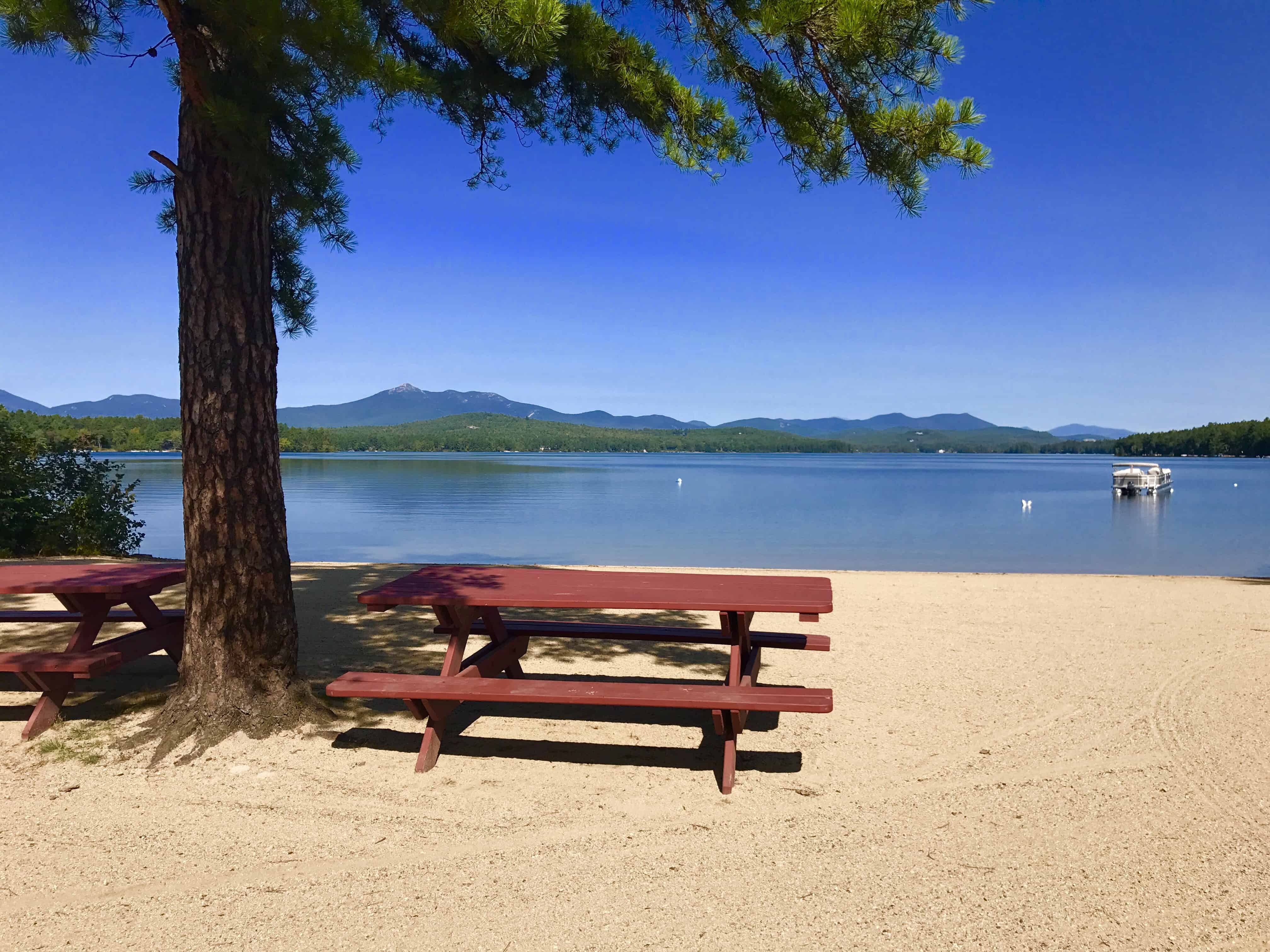
Moores Pond: A Quiet Gem Straddling Tamworth and Madison

If you're looking for a peaceful spot on the water in the Mt. Washington Valley, Moores Pond might be exactly what you have in mind. Tucked along the Tamworth-Madison town line, this little pond offers the kind of laid-back, unplugged experience that makes this corner of New Hampshire so special.

The Basics

Moores Pond covers about 43 acres, with an average depth of 12 feet and a maximum depth of 30 feet. It's not a big pond by any measure, but it punches above its weight when it comes to charm — with a sandy beach and terrific views of the surrounding mountains.

No Motors, No Problem

One of the things that makes Moores Pond so pleasant is what you won't find on it: motorboats. Boating is limited to kayaks, canoes, and sailboats, which keeps the water calm, the noise level low, and the overall vibe exactly right. Paddle out at sunrise and you'll understand why people fall in love with this place.

Good Fishing

Anglers will find plenty to keep them busy. Moores Pond is known for largemouth bass, smallmouth bass, chain pickerel, and perch — and the lily pad-covered shallows make for classic topwater bass fishing on a warm summer morning. It's the kind of fishing that rewards a quiet approach, which fits perfectly given the no-motor rule.

Getting There: Two Community Access Points

Access to Moores Pond is private, coming through two established neighborhood communities. On the Tamworth side, residents of the Chocorua Ski & Beach Club enjoy waterfront access as one of the community's signature amenities. On the Madison side, Carved in Bark offers its residents their own access to the pond.

If you're shopping for a home in either of these communities, waterfront access to a quiet, motor-free pond is part of the package — and that's a pretty nice thing to come home to.

Photo by Joe Viger Photography | https://www.joeviger.com/


Interested in properties with access to Moores Pond or other waterfront communities in the Mt. Washington Valley?
Reach out to us at North Conway Realty — we know this market inside and out.

Inside One of Bartlett's Most Luxurious Vacation Rentals (And Why It Books Fast)


If you've been searching for the perfect White Mountains group getaway, this Bartlett chalet might be the one that ends the search.

Here is the VRBO listing 

I had a chance to walk through this property recently, and I can tell you firsthand — it delivers. Four bedrooms, a loft, two king suites, a hot tub, and 4,700 square feet of modern luxury, all sitting about three minutes from Attitash Mountain Resort. Whether you're planning a ski trip, a fall foliage weekend, or a summer escape, this rental checks boxes most properties in the valley can't.


What Makes This Property Stand Out

The layout is what gets me. A lot of group rentals in this area feel like they were cobbled together — bedrooms too small, bathrooms stretched thin, common areas that can't comfortably hold everyone at once. This one was clearly designed with groups in mind. Two king suites mean the "who gets the good room" argument is settled before it starts, and with capacity for 12 and over four and a half thousand square feet to spread out in, it never feels crowded.

The hot tub is the obvious crowd-pleaser, but the interior finishes are what elevate it to luxury territory. Modern design, a full private kitchen, in-unit washer and dryer, free WiFi, and air conditioning — the kind of amenities that make a long weekend feel effortless rather than logistical.


Location Is Everything Here

Attitash Mountain Resort is three minutes away. The Saco River is three minutes in the other direction. Story Land — if you're bringing kids — is a twelve-minute drive. You're also well-positioned for everything North Conway has to offer: the outlets, the dining scene, the hiking, the Conway Scenic Railroad.

This is the kind of location where you don't feel like you have to choose between adventure and relaxation. You can ski all day and be soaking in a hot tub under the stars by 6 PM.


Who This Rental Is Built For

This property makes the most sense for:

  • Ski groups looking for a true basecamp within minutes of Attitash
  • Multi-family trips where two separate king suites matter
  • Corporate or celebratory retreats that need space, comfort, and a wow factor
  • Summer and fall travelers who want a luxury anchor while exploring the valley

See what has sold in any neighborhood.

See What’s Sold in Your Favorite Neighborhood — Instantly

If you’re watching the real estate market in specific North Conway area communities, the new Sold Properties Community Pages make it easier than ever to see what’s actually sold recently.

These pages consolidate ALL properties that have sold in the last 180 days and present them in a simple, map-based search format. You can visually explore exactly what’s moved, where it closed, and at what price — right in the neighborhood you’re interested in.

Whether you’re looking at:

  • Eidelweiss

  • Chocorua Ski & Beach Club

  • Birch Hill

  • Christmas Mountain

  • …or any other community around the Mount Washington Valley

the interactive map helps you see the data in context. No scrolling through long lists or scrolling through old sales — everything recent and relevant is right there.

Here’s an example of a community page:
https://northconwayrealty.com/listings/saved-search/990910/

Want a Page for a Different Neighborhood?

If you don’t see the area you’re focused on yet, let me know. I’ll build a custom sold-property search page for that neighborhood right away — so you can track recent sales without any extra friction.

These pages are designed to give you clarity and confidence in the market. Let me know what area you want next.

The Seasons in Bartlett NH

If you’re looking for a true four-season condo community in Bartlett, The Seasons at Attitash stands out as one of the most complete resort-style options in the North Conway area.

The Layout & Community

The Seasons is made up of 22 buildings, with 8 units per building. The layout feels organized and cohesive, but not overcrowded. Buildings are spread out nicely, with green space and mountain surroundings that remind you why people love this part of the White Mountains.

Location: Minutes to the Slopes

One of the biggest advantages? You’re just a couple of minutes from Attitash Mountain Resort and Bear Peak.

That proximity makes winter rentals incredibly attractive. Owners and guests can be parked and on the lift in no time. And when the snow melts, you’re still right in the heart of everything — hiking, mountain biking, the Saco River, Story Land, and a short drive into North Conway for shopping and restaurants.

It’s a location that works year-round, not just ski season.

Amenities That Set It Apart

The Seasons isn’t just about condos — it’s about the experience.

Here’s what makes it one of the few true “resort-style” communities in the area:

  • Indoor heated pool

  • Little Fenway wiffle ball field

  • Hot tub

  • Fitness center

  • Arcade / game room

  • Clubhouse space

  • Tennis courts & outdoor recreation areas

That indoor/outdoor pool setup is a big deal in this market. There simply aren’t many condo developments nearby that offer this level of amenities in one place.

For vacation rental guests, that means built-in entertainment regardless of weather. For owners, it adds strong lifestyle value and rental appeal.

On-Site Rental Program

Another major advantage is the on-site rental program. For owners who don’t want to manage bookings, cleaning coordination, or guest communication themselves, having a structured rental option right on property can be a huge plus.

It creates convenience and continuity — especially for out-of-state owners who want income potential without the daily management stress.

Who Is The Seasons Ideal For?

The Seasons works well for:

  • Ski families who want easy access to Attitash

  • Buyers looking for short-term rental potential

  • Owners who want amenities without the price tag of a single-family home

  • People who want a low-maintenance second home

It’s one of the few communities in the North Conway/Bartlett area that truly blends location, amenities, and rental flexibility in one package.


If you’re comparing condos in Bartlett — whether it’s Linderhof, Nordic Village, or other developments — The Seasons deserves a close look. It continues to be one of the more well-rounded resort communities in the valley.

If you’d like to see current availability or talk through how it stacks up as an investment versus personal-use property, just let me know.

Mountain Views and an In-Town Location: Why 16 Purple Finch Road Is Such a Rare Find in North Conway

There are certain properties where the location alone makes them stand out—and 16 Purple Finch Road is one of them. Set in a quiet, tucked-away spot within the Northbrook development, this 3-bedroom, 2-bath condo offers something that’s surprisingly hard to find in North Conway: mountain views, privacy, and true in-town convenience all at the same time. From your private deck, you’re looking directly toward Mount Kearsarge, Hurricane Mountain, and Cranmore.

In the winter, you can see the ski trails lit up across the valley. In the fall, the foliage fills the view. And in every season, the mountains serve as a constant reminder of why people love being here. What makes this location even more appealing is how close you are to everything. Cranmore Mountain is just minutes away, making early morning ski runs easy. Attitash and Wildcat are both within a short drive, giving you access to some of the best skiing and riding in the Mount Washington Valley. If cross-country skiing is more your style, the Mount Washington Valley Ski Touring Center and Whitaker Woods offer miles of groomed trails just a few minutes from your door. Beyond skiing, you’re right in the heart of North Conway. Restaurants, shops, golf courses, hiking trails, and everyday conveniences are all nearby. You can be on the slopes in the morning, back home for lunch, and out to dinner in town without ever feeling like you’ve spent your day driving.

Within the NorthBrook community itself, the setting is peaceful and well-spaced across 46 wooded acres. This particular unit sits in one of the quieter areas, away from traffic, yet still close to the pool, tennis courts, and walking trails. It’s the kind of location that gives you both access and privacy—something buyers consistently value here. Whether you’re looking for a full-time home, a weekend escape, or a place to enjoy the ski season and beyond, 16 Purple Finch Road offers the combination of views, location, and convenience that makes North Conway such a special place to own property. Be sure to watch the video above to get a better sense of the setting, the views, and just how well-positioned this condo really is.

https://northconwayrealty.com/listing/5076454/16-purple-finch-road-conway-nh-03860/

Winter Night Out at Cranmore Mountain in North Conway

If you’re looking for something fun to do in North Conway at the end of January, Cranmore Mountain is hosting one of their most popular winter events on Friday, January 31, from 4:00–7:00 PM in the base area.

This family-friendly evening is packed with entertainment, including live ice carving, fire dancing performances, caricature artists, and a fireworks show at 6:30 PM to wrap up the night. It’s a great way to enjoy winter in the Mount Washington Valley—whether you’re visiting or lucky enough to live here full-time.

Events like this are part of what makes North Conway such a special place to call home. If you’re ever curious about living near Cranmore or anywhere in the valley, North Conway Realty is always happy to help.

https://cranmore.com/events/frost-flame

Comments

  1. No comments. Be the first to comment.

Madison NH STR update

Madison Short-Term Rentals: What the Recent Court Ruling Really Means

There’s been a lot of chatter lately about short-term rentals in Madison, and for good reason. A recent Land Court decision has clarified (and complicated) how the town can regulate STRs going forward. If you own a short-term rental in Madison—or are thinking about buying one—here’s a plain-English breakdown of what actually changed.

A split decision, by design
In short, both the town and short-term rental owners walked away with a win—and a loss.

The court ruled that owners who were already operating short-term rentals before March 2022 can continue renting without the town limiting the number of days per year they operate. That’s a meaningful win for grandfathered STR owners who were previously capped based on historical use plus a small percentage.

On the flip side, the court upheld Madison’s authority to prohibit new short-term rentals that started after March 2022. From a zoning standpoint, the town’s ordinance still stands.

Town officials summarized it succinctly: Madison’s zoning regulations remain strong, but the town cannot impose day-count limits on owners who were renting prior to the 2022 change.

What happened to the specific cases?
Several individual STR owners challenged the town’s decision to cap their annual rental days. Those caps—some as low as a couple of months per year—were struck down by the court for pre-2022 rentals. In contrast, one case involving a property that began operating after the 2022 regulation went into effect was not successful, reinforcing the town’s ability to bar new STRs under the current ordinance.

There is still some legal motion ahead. A vacation rental advocacy group has indicated it plans to appeal the ruling related to that newer STR case to the state Supreme Court. Meanwhile, the town is not appealing the portion of the ruling it lost.

What this means for owners and buyers
If you were renting your Madison property short-term prior to March 2022, this decision is significant. You’re no longer subject to town-imposed limits on how many days per year you can rent.

If you started renting after that date—or are considering buying a property with the intention of creating a new short-term rental—the landscape hasn’t changed much. The town’s ban on new STRs is still intact, at least for now.

Why this matters beyond Madison
This case is another example of how New Hampshire towns are trying to balance housing concerns, neighborhood character, and property rights. Madison isn’t alone, and this ruling will likely be referenced as other communities revisit or defend their own short-term rental rules.

As always, if you own an STR or are evaluating one as an investment, local timing, historical use, and zoning details matter—a lot. These aren’t “one-size-fits-all” rules, and this case is a good reminder of that.

If you want to talk through how this might affect a specific property in Madison or the surrounding towns, I’m always happy to help.

North Conway Home Sales 2024 vs 2025

North Conway Single-Family Home Sales: 2024 vs. 2025 (Zip Code 03860)

If you’re trying to understand where the North Conway single-family home market is headed, comparing last year to this year tells a pretty interesting story. On the surface, prices look fairly stable—but when you dig in, buyer behavior and market dynamics definitely shifted.

Below is a side-by-side look at 2024 vs. 2025 sales in zip code 03860, followed by what it actually means if you’re thinking about buying or selling.

📊 2024 Market Snapshot

  • Total Sales: 40

  • Price Range: $290,000 – $1,200,000

  • Median Sales Price: $528,000

  • Average Sales Price: $551,000

  • Median Days on Market: 12

  • Average Days on Market: 38

  • Cash Sales: 15 (37.5%)

What stood out in 2024:
Homes that were priced right moved quickly. A median of just 12 days on market tells us that well-positioned listings didn’t sit around long, especially in the more desirable neighborhoods. Cash buyers played a big role, making up more than a third of all sales.

📊 2025 Market Snapshot

  • Total Sales: 60

  • Price Range: $275,000 – $1,700,000

  • Median Sales Price: $505,000

  • Average Sales Price: $576,000

  • Median Days on Market: 16

  • Average Days on Market: 43

  • Cash Sales: 18 (30%)

What changed in 2025:
Activity picked up noticeably, with 50% more sales than the year before. The price range expanded on both ends—more entry-level homes sold, but we also saw higher-end transactions pushing the top of the market to $1.7M.

Homes took a bit longer to sell overall, suggesting buyers became more selective and price sensitivity increased.

1. More Sales, Slightly Softer Median Price

Even though the median price dipped from $528,000 to $505,000, the average price rose. That usually means:

  • More lower-priced homes entered the mix

  • High-end sales still performed well

In other words, the market broadened rather than weakened.

2. Homes Are Taking Longer—but Still Moving

Median days on market increased from 12 to 16 days, and average days from 38 to 43. That’s not a slowdown—it’s a normalization. Buyers are taking a bit more time, asking more questions, and being choosier.

3. Cash Is Still King (But Less Dominant)

Cash sales dropped slightly as a percentage:

  • 2024: 37.5%

  • 2025: 30%

Cash buyers are still very much part of the market, but financed buyers are competing more often—especially as inventory improves.

🏡 What This Means for Sellers

  • Pricing strategy matters more than ever

  • Overpriced homes will sit longer than they did in 2024

  • Proper presentation and marketing still lead to strong results

  • There is plenty of buyer demand when the value makes sense

🏠 What This Means for Buyers

  • Slightly more negotiating room than last year

  • More inventory to choose from

  • Still need to be decisive on well-priced homes

  • Cash isn’t required—but strong terms matter

The North Conway single-family home market didn’t cool off—it evolved. More homes sold, price points widened, and the pace became healthier and more balanced.

If you’re thinking about buying, selling, or just want to understand how these numbers apply to your situation, that’s where a hyper-local approach makes all the difference.

Madison, NH Real Estate Market Update: 2024 vs. 2025 YTD

If you’re watching the Madison, New Hampshire real estate market, the big takeaway so far is consistency. When we compare full-year 2024 single-family home sales to 2025 year-to-date activity, Madison is showing a very similar pace, with prices continuing to trend upward while homes take just a bit longer to sell.

2024 Madison Single-Family Home Sales

  • Total sales: 53

  • Median selling price: $399,000

  • Average selling price: $523,000

  • Median days on market: 12

2024 was a strong year for Madison, with quick sales and solid pricing across most segments of the market. Well-priced homes moved fast, and buyer demand stayed steady throughout the year.

2025 Year-to-Date Madison Market Snapshot

  • Total sales: 50

  • Median selling price: $465,000

  • Average selling price: $551,000

  • Median days on market: 21

At nearly the same number of sales as last year, 2025 is tracking closely to 2024 in terms of activity. The most noticeable change is pricing. Both the median and average selling prices are higher, suggesting continued demand and an increasing number of higher-end sales.

Homes are taking a bit longer to sell in 2025, with median days on market rising from 12 to 21. This doesn’t signal a slow market, but it does point to buyers being a little more selective and sellers needing to be more thoughtful with pricing and presentation.

What This Means for Buyers and Sellers in Madison

For sellers:
Madison remains a strong market. Prices are holding — and even improving — but the days of “list it on Friday and accept an offer by Sunday” aren’t guaranteed. Proper pricing, good photos, and a clear strategy matter more than ever.

For buyers:
While prices are higher, the slight increase in days on market can create opportunity. There may be more time to evaluate homes, ask questions, and negotiate terms compared to the ultra-fast pace of previous years.

The Big Picture

Overall, Madison is having a very similar year to 2024, with steady sales volume and rising prices. The market hasn’t shifted dramatically, but it has matured. Balanced expectations on both sides of a transaction are key in 2025.

If you’re thinking about buying or selling in Madison and want to understand how these numbers apply to a specific property or neighborhood, a local, data-driven approach makes all the difference.

The Small Upgrade That Can Save You Big Headaches: Septic Tank Risers

Why Every Homeowner Should Invest in a Septic Tank Riser

If you own a home in New Hampshire, you already know: winter can be brutal. When the snow piles up to three feet deep and the ground is frozen solid, the last thing you want to deal with is trying to locate and dig out your septic tank lid. But if something goes wrong—or even if you just need routine maintenance—finding and accessing your tank in the middle of February can turn into a costly and stressful ordeal.

That’s where a septic tank riser comes in.

What Is a Septic Tank Riser?

A riser is simply an extension that brings the access lid of your septic tank up to ground level. Instead of being buried under dirt, rocks, or feet of snow, your tank can be reached quickly and easily with no digging required.

Why It’s Worth the Investment

  • Snow and frozen ground aren’t a problem. Imagine trying to dig through frozen soil in single-digit weather. Without a riser, that’s your reality if your tank needs attention in the winter.

  • Emergency access. Septic issues rarely happen at “convenient” times. A riser ensures you (or your service provider) can get to the tank right away, without waiting for a thaw.

  • Peace of mind. For a few hundred dollars, you gain the comfort of knowing that if a problem ever comes up, you’re prepared. It’s one of those small upgrades that pays for itself the very first time you need it.

  • Easier maintenance. Pumping and inspections become faster and cheaper since the tank is always accessible.

Think of It Like Insurance

A riser is the kind of investment you hope you won’t need to use often. But the one time you do? It more than covers its cost. When you picture someone outside in January trying to chip away at the frozen ground just to locate your septic tank lid—you’ll be glad you spent the money.

If you don’t already have a septic riser, consider adding one before the snow flies this year. For most homeowners, it’s a small project with a huge payoff: less stress, lower costs, and the ability to sleep easy knowing that your septic system is accessible any time of year.

Carroll County Real Estate: 2025 vs. Pre-COVID 2019

We often hear people talk about wanting to return to a “normal” real estate market — like the one we had before COVID hit. But how does today’s market actually stack up against 2019? Let’s look at the first five months of each year and see what’s really changed.

Category 2019 (YTD)        2025 (YTD)       % Change
Homes Listed  614 498 -18.9%
Homes Under Contract       237 229 -3.4%
Homes Closed 332 287 -13.6%
Median Sold Price $277,250 $489,000 +76.4%
Median Days on Market 57 25 -56.1%

What These Numbers Tell Us

  • Listings Are Down: Inventory is still tight compared to 2019, with nearly 19% fewer homes listed so far in 2025.

  • Demand Remains Strong: The number of homes going under contract is only slightly down (3.4%) despite fewer listings — showing buyer interest is holding steady.

  • Fewer Closings: Closed sales are down about 13.6%, but that’s not surprising given the limited inventory.

  • Prices Have Soared: The median sold price jumped from $277,250 in 2019 to $489,000 in 2025 — a 76% increase. Home values have nearly doubled in six years.

  • Homes Sell Faster: Median days on market have been slashed by more than half — from 57 days in 2019 to just 25 days today. Well-priced homes are moving quickly, even in a more “normal” environment.

The Big Picture

Compared to pre-COVID days, Carroll County’s market is very different:

  • There are fewer homes for sale.

  • Prices are dramatically higher.

  • Homes are selling much faster.

While some signs suggest a bit of normalization — like more price adjustments and buyers being slightly more selective — the market hasn’t returned to 2019 conditions. If anything, we’ve entered a new era where inventory remains tight and prices reflect the high demand and limited supply that have defined the past several years.

1-15 of 85 Posts